A hot water system that fails without warning is one of the most inconvenient plumbing emergencies a homeowner can face. Cold showers aside, an unexpected breakdown often means rushing to find a replacement, paying premium prices for urgent installation, and having limited choice in which system you end up with. The good news is that most hot water systems give clear warning signs before they fail completely. Knowing what to look for gives you time to plan and budget for a replacement on your own terms.
Here are five signs that your hot water system is nearing the end of its life and should be replaced sooner rather than later.
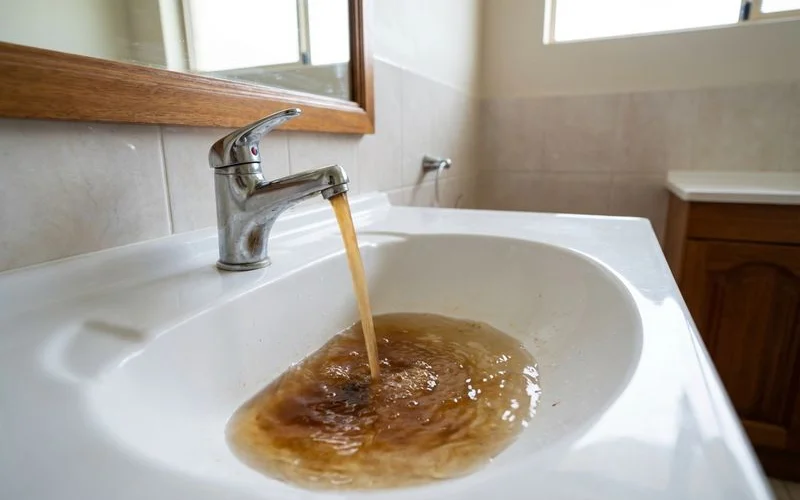
1. Your Hot Water Is Discoloured or Rusty
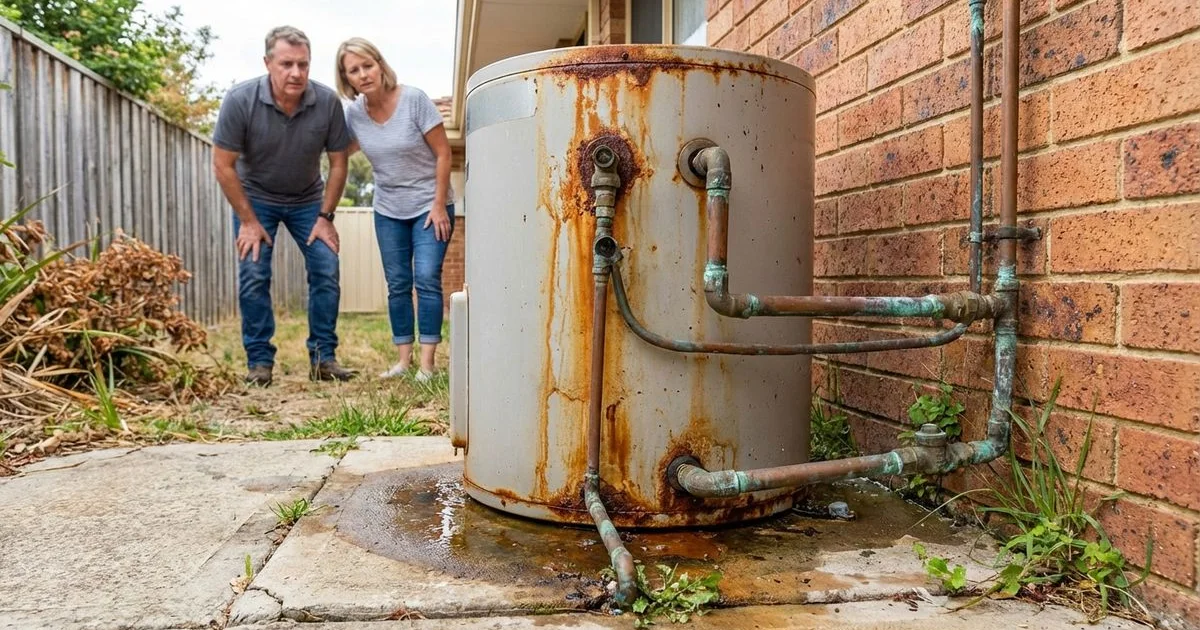
If the hot water coming from your taps has a brown, orange, or rusty tint, this is a strong indicator that the inside of your hot water tank is corroding. Most storage tanks have a sacrificial anode rod designed to attract corrosive elements and protect the tank lining. Once the anode is fully consumed and not replaced, corrosion attacks the tank itself.
Rusty water from hot taps only, while cold water runs clear, almost certainly points to the hot water system rather than your mains supply pipes. In some cases, replacing the anode rod can extend the tank’s life by a few more years, but if the corrosion has already compromised the tank lining, replacement is the only option.
It is worth noting that discoloured water can occasionally come from sediment buildup in the bottom of the tank. A licensed plumber can inspect the system and determine whether an anode replacement or a full tank flush will solve the problem, or whether the tank is too far gone and needs replacing.
2. You Are Running Out of Hot Water Faster Than Usual
If your household’s hot water usage has not changed but you are running out of hot water sooner during showers or when filling the bath, the system is losing its heating efficiency. This can happen for several reasons.
Sediment accumulation in the bottom of the tank reduces the effective capacity and insulates the water from the heating element or burner. Over years of use, minerals in the water supply settle and harden into a layer of scale that progressively shrinks the usable volume of the tank.
Failing heating elements in electric systems or deteriorating gas burner components can also reduce the system’s ability to heat water to the set temperature. If the thermostat is functioning correctly but the water is lukewarm rather than hot, the heating mechanism is likely struggling.
For a family of four in Rockingham, a well-functioning 170-litre gas storage system should comfortably provide enough hot water for consecutive showers and daily household tasks. If it cannot keep up, the system’s performance is declining and replacement should be considered, especially if the unit is more than eight to ten years old.
3. The System Is Making Unusual Noises
Some operational noise from a hot water system is normal, particularly a quiet hum from an electric element or the sound of a gas burner igniting. However, loud banging, popping, crackling, or rumbling sounds indicate a problem.
These noises are most commonly caused by sediment buildup at the bottom of the tank. As the burner or element heats the water, it also heats the layer of sediment, which causes it to crack and shift. The popping and rumbling sounds come from water bubbling up through the hardened sediment.
Banging sounds, sometimes called water hammer, can also occur when valves open and close rapidly. While water hammer is not directly a hot water system fault, it puts additional stress on an aging system and can accelerate failure.
If flushing the tank does not resolve the noise, the sediment has likely hardened to the point where it cannot be removed without damaging the tank. At this stage, replacement is the practical solution.
4. Visible Leaks or Moisture Around the Unit
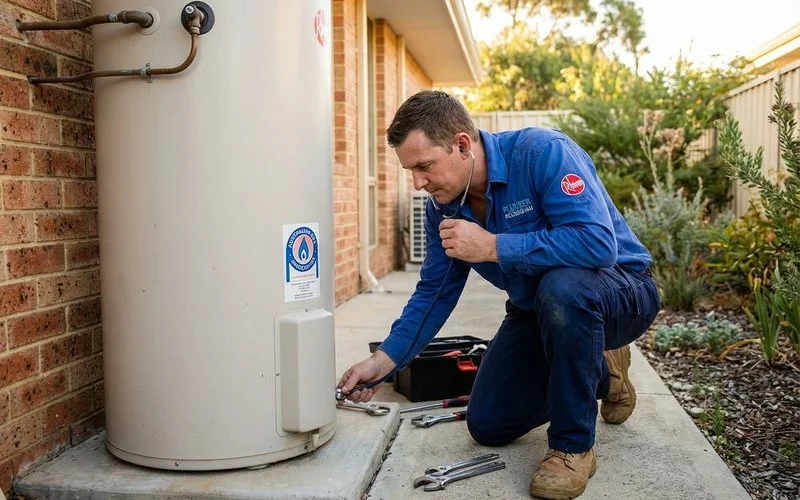
Any sign of water pooling, dripping, or moisture around the base of your hot water system should be investigated immediately. Small leaks can indicate several issues, some repairable and some terminal.
The pressure and temperature relief valve is designed to release small amounts of water under normal operation, and a properly installed system will have a drain pipe directing this discharge safely away. If water is leaking from somewhere other than the relief valve drain, you may have a more serious problem.
Cracks or corrosion holes in the tank itself cause leaks that cannot be repaired. Tank leaks will only get worse over time and can cause significant water damage to surrounding structures if the system is located indoors or in a garage. Pipe connections and fittings can also develop leaks due to corrosion or thermal expansion over years of heating cycles.
If you notice any moisture around your hot water system, have a licensed plumber inspect it promptly. Catching a minor fitting leak early is inexpensive to fix, but ignoring a tank leak can lead to a catastrophic failure and flooding.
5. The System Is Over 10 Years Old
Age alone is not a reason to replace a hot water system that is working perfectly, but it is an important factor in your decision-making. Most hot water systems in Australia have the following expected lifespans.
Gas storage systems typically last 8 to 12 years. Electric storage systems last 8 to 12 years. Continuous flow gas systems can last 15 to 20 years with proper maintenance. Heat pump systems generally last 10 to 15 years.
If your system is approaching or has exceeded these age ranges and you are noticing any of the other warning signs listed above, it is almost certainly more cost-effective to replace rather than repair. Repair costs on aging systems can quickly add up, and the repaired component is still part of a system where everything else is equally old and prone to failure.
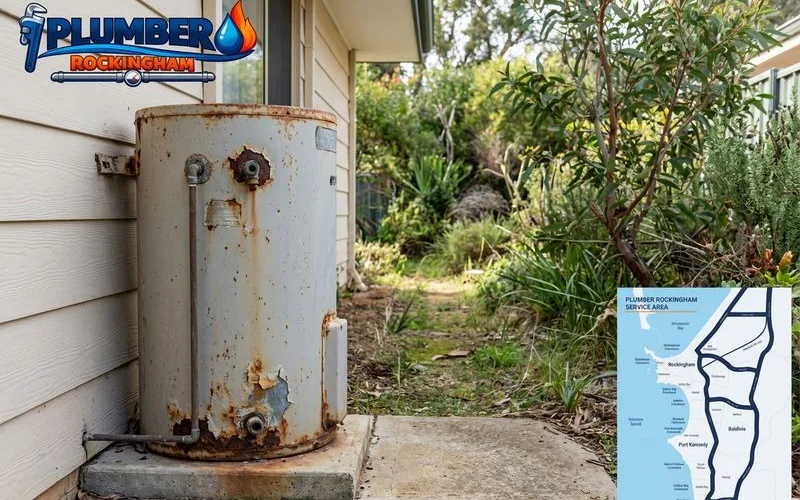
Rockingham’s water supply, while treated, does contain minerals that contribute to sediment buildup and anode consumption over time. Coastal proximity can also accelerate corrosion on external components, particularly for systems installed outdoors.
What to Do If You Notice These Signs
If your hot water system is showing one or more of these warning signs, do not wait for it to fail completely. A planned replacement is always cheaper and less stressful than an emergency one. Start by having a licensed plumber assess your current system. They can tell you whether a repair will buy you meaningful extra time or whether replacement is the smarter investment.
When it is time for a new system, consider upgrading to a more energy-efficient option. If you currently have an electric storage system, switching to a heat pump or continuous flow gas system can significantly reduce your quarterly energy bills. Government rebates for heat pump systems can also bring the upfront cost down substantially.
For expert advice on whether your hot water system needs replacing and which hot water system is the best fit for your Rockingham home, contact Plumber Rockingham. We provide honest assessments, upfront pricing, and professional installation across Rockingham, Baldivis, Port Kennedy, Warnbro, and all surrounding suburbs.