Your hot water system is one of the hardest-working appliances in your home, operating 24 hours a day to ensure you have hot water whenever you need it. Despite this, hot water systems are often neglected until something goes wrong. Regular maintenance can add years to your system’s lifespan, improve its efficiency, and help you avoid expensive emergency replacements. Here are the essential maintenance tasks every Rockingham homeowner should know about.
Check and Replace the Sacrificial Anode Rod
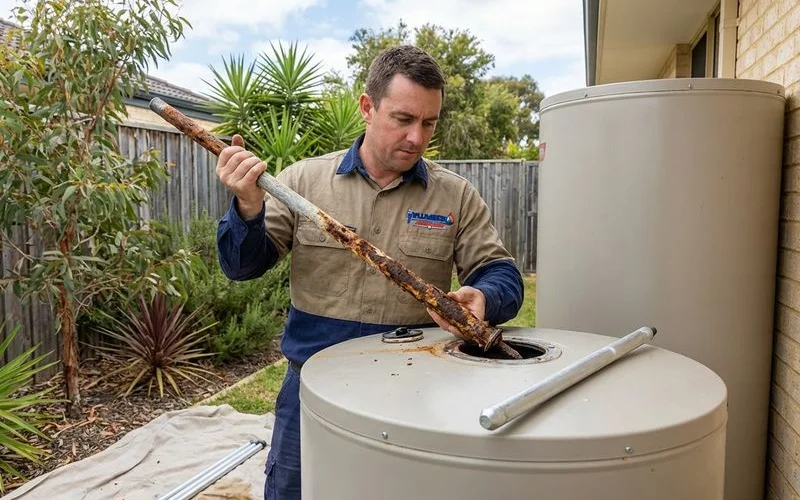
The sacrificial anode rod is arguably the most important component you have never heard of. It is a metal rod, usually made of magnesium or aluminium, that sits inside your hot water tank and attracts corrosive elements in the water. By corroding itself, the anode rod protects the tank lining from rust and deterioration.
Over time, the anode rod is consumed and loses its protective ability. Once it is fully depleted, the corrosive elements in the water begin attacking the tank itself, leading to rust, leaks, and eventual failure. In Rockingham, where the water supply contains moderate mineral content, anode rods typically last three to five years before needing replacement.
Having your anode rod inspected every three years and replaced when necessary is the single most effective thing you can do to extend your tank’s lifespan. A replacement anode rod costs between $100 and $250 including labour, compared to $1,500 to $5,000 for a complete system replacement. It is one of the best returns on investment in home maintenance.
Flush the Tank to Remove Sediment
Over months and years of use, minerals, sand, and other sediment in the water supply settle at the bottom of your hot water tank. This sediment layer causes several problems. It reduces the effective capacity of the tank, meaning less hot water is available. It insulates the bottom of the tank from the heating element or gas burner, forcing the system to work harder and use more energy. It can also cause banging and rumbling noises during heating cycles.
Flushing your hot water tank involves draining several litres of water from the drain valve at the bottom of the unit to wash out accumulated sediment. For a DIY approach, you can attach a garden hose to the drain valve and open it for two to three minutes until the water runs clear. However, if the valve has not been operated in several years, it may be corroded or difficult to open, and forcing it can cause leaks.
A professional tank flush performed by a licensed plumber is more thorough and avoids the risk of damaging an old drain valve. Plumbers can also inspect the condition of the tank lining during the flush to assess how much useful life remains.
Flushing should be done at least once a year. In areas with harder water or higher sediment levels, twice a year is recommended.
Test the Pressure and Temperature Relief Valve
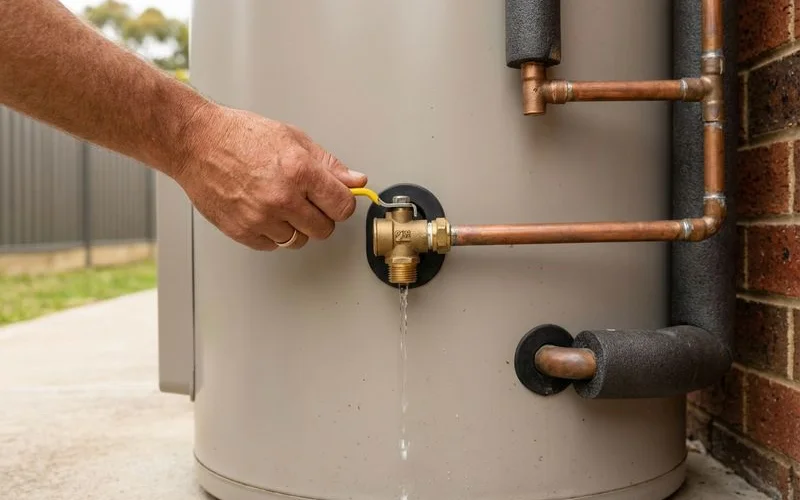
The pressure and temperature relief valve, commonly called the PTR valve or TPR valve, is a critical safety device on every hot water tank. It is designed to open and release water if the pressure or temperature inside the tank exceeds safe levels. Without a functioning relief valve, excessive pressure could cause the tank to rupture or, in extreme cases, explode.
Testing the valve is straightforward. Lift the lever on the valve briefly and check that water flows freely through the discharge pipe. Then release the lever and confirm the valve closes completely and stops dripping. If the valve does not release water when lifted, or if it continues to drip after being released, it needs to be replaced.
PTR valves should be tested every six months. Most valves have a recommended replacement interval of five years regardless of condition, as internal components can degrade and become unreliable even if the valve appears to work during testing.
The discharge pipe from the PTR valve should be directed safely away from areas where people walk or where water could cause damage. In Rockingham, the pipe should terminate no more than 300 millimetres above ground level and must not be capped, plugged, or reduced in size.
Set the Correct Temperature
The thermostat on your hot water system controls the maximum temperature of the stored water. In Australia, the recommended storage temperature is 60 degrees Celsius. This temperature is high enough to prevent the growth of Legionella bacteria, which can multiply in water stored below 60 degrees, while still being within a safe and efficient operating range.
A tempering valve should be installed on all hot water systems to blend the 60-degree stored water with cold water before it reaches your taps. The tempering valve reduces the delivery temperature to a maximum of 50 degrees at the tap, which prevents scalding while maintaining safe storage conditions in the tank.
Setting the thermostat higher than 60 degrees wastes energy and increases the risk of scalding if the tempering valve fails. Setting it lower than 60 degrees creates a health risk from bacterial growth. If you are unsure what temperature your system is set to, a plumber can check and adjust it during a routine service.
Inspect the Unit and Surrounding Area
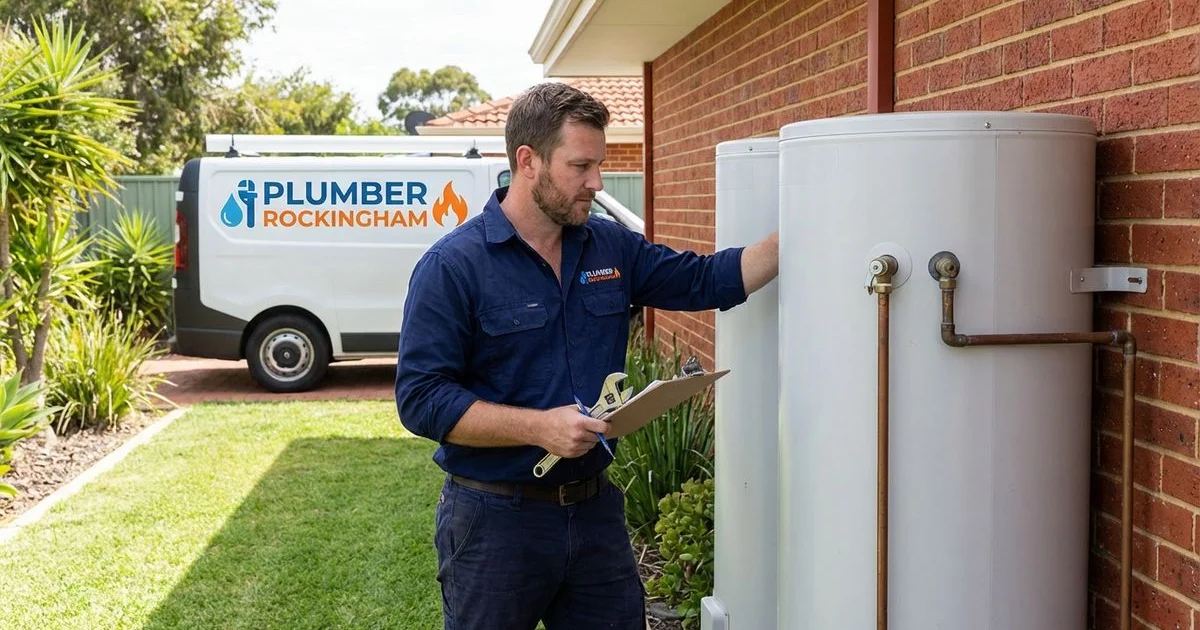
A quick visual inspection of your hot water system every few months can catch developing problems early. Look for the following.
Leaks and moisture. Check around the base of the tank, pipe connections, and valves for any signs of dripping or pooling water. Even a small leak can indicate a developing problem.
Corrosion. Look for rust stains on the tank exterior, pipe fittings, and mounting brackets. External corrosion is common on systems installed outdoors in coastal areas like Rockingham due to salt air exposure.
Clearances. Gas hot water systems need adequate ventilation and clearance from combustible materials. Check that nothing has been stored too close to the unit, particularly in garages where belongings tend to accumulate around the system.
Flue and exhaust. For gas systems, ensure the flue pipe is intact, securely connected, and free from blockages. A damaged or blocked flue can cause dangerous carbon monoxide buildup.
Pilot light. If your gas system uses a pilot light rather than electronic ignition, check that the flame is steady and blue. A yellow or flickering pilot flame can indicate incomplete combustion or a gas supply issue.
Schedule Professional Servicing
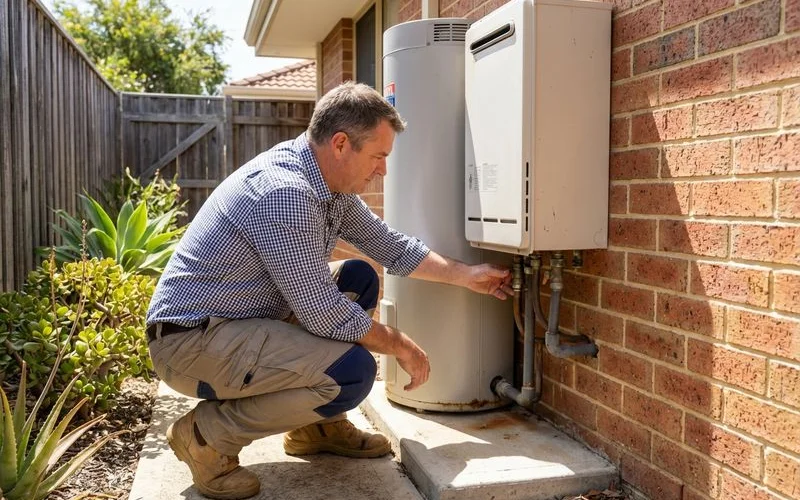
While some maintenance tasks can be performed by a handy homeowner, a professional service by a licensed plumber every three to five years is strongly recommended. A plumber can perform a comprehensive inspection that includes checking the anode rod condition, testing the PTR valve, inspecting gas connections and burner components, verifying thermostat accuracy, and assessing the overall condition of the tank and fittings.
Professional servicing is particularly important for gas hot water systems, where faulty components can pose safety risks. In Western Australia, all gas fitting work must be performed by a licensed gas fitter. Attempting to service gas components yourself is both illegal and dangerous.
Create a Maintenance Schedule
The easiest way to stay on top of hot water system maintenance is to create a simple schedule.
Every 6 months: Test the PTR valve. Do a visual inspection for leaks, corrosion, and clearances.
Every 12 months: Flush the tank to remove sediment. Check the thermostat setting.
Every 3 to 5 years: Have a licensed plumber inspect and replace the anode rod if needed. Book a full professional service.
Every 5 years: Replace the PTR valve regardless of condition.
Following this schedule will help your hot water system reach or exceed its expected lifespan, reduce your energy bills, and minimise the chance of an unexpected breakdown.
Keep Your System Running Longer
Regular maintenance is the most cost-effective way to protect your investment in a hot water system. A few simple checks and a periodic professional service can add five or more years to a system’s useful life and save you thousands of dollars in premature replacement costs.
If your hot water system is due for a service or you have noticed any warning signs of failure, contact Plumber Rockingham today. Our licensed plumbers provide thorough hot water system maintenance and servicing across Rockingham, Baldivis, Secret Harbour, Warnbro, and all surrounding suburbs.