Choosing the right hot water system for your Rockingham home is one of the most important decisions you will make as a homeowner. Hot water accounts for roughly 25 to 30 percent of a typical Australian household’s energy bill, so selecting the wrong system can cost you hundreds of dollars every year. With several technologies now available, including gas storage, continuous flow gas, electric storage, and heat pump systems, it pays to understand how each one works and which suits the Rockingham climate and your household’s needs.
Gas Storage Hot Water Systems
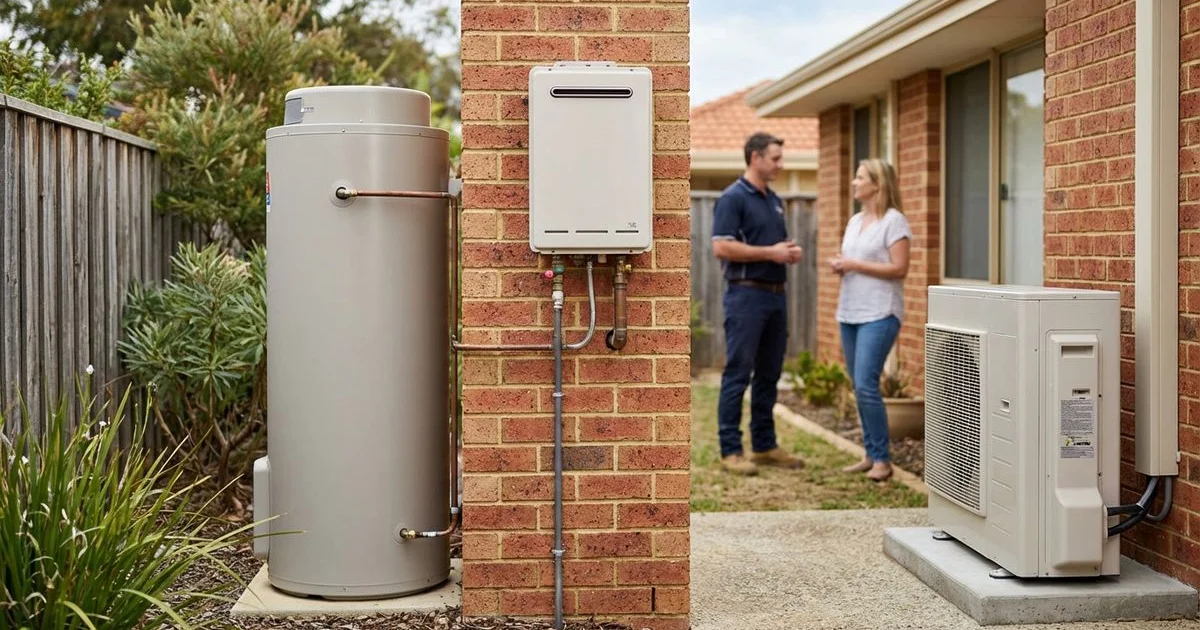
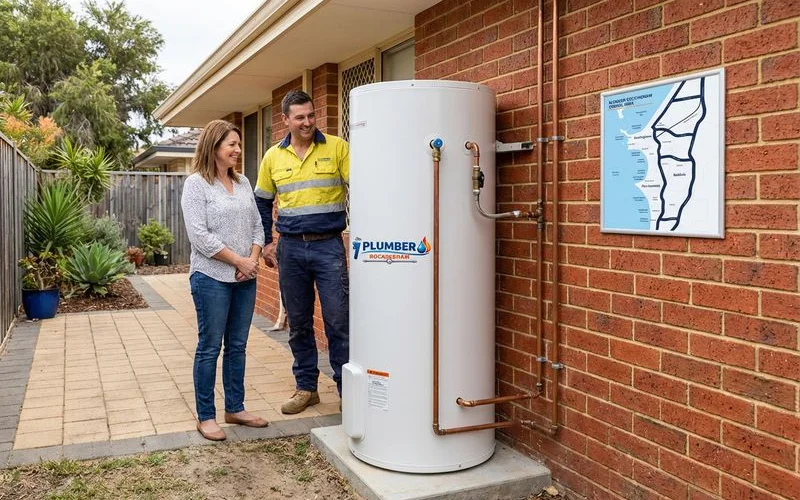
Gas storage systems heat water in an insulated tank using a gas burner. They keep a reservoir of hot water ready for use at all times. Tank sizes typically range from 135 litres for small households up to 360 litres for larger families.
Advantages of gas storage:
- Lower upfront purchase cost compared to heat pumps
- Reliable supply of hot water even during peak demand
- Works well during power outages if the ignition is pilot-based
- Familiar technology that most plumbers can service quickly
Disadvantages of gas storage:
- Standing heat losses mean the tank is constantly using energy to keep water hot
- Larger physical footprint in your yard or garage
- Tank lifespan is generally 10 to 15 years before replacement is needed
- Higher ongoing gas bills compared to heat pump technology
For a family of four in Rockingham, a 170-litre gas storage system typically costs between $80 and $120 per quarter to run, depending on usage patterns and current gas tariffs.
Continuous Flow Gas Hot Water Systems
Continuous flow systems, also known as instantaneous or tankless systems, heat water on demand as it passes through a heat exchanger. There is no storage tank involved.
Advantages of continuous flow:
- Unlimited hot water since it heats on demand
- Compact wall-mounted design saves space
- No standing heat losses, so it only uses gas when you turn a tap on
- Longer lifespan of around 15 to 20 years with proper maintenance
Disadvantages of continuous flow:
- Higher upfront cost than gas storage
- Flow rate can be limited if multiple outlets are running simultaneously
- Requires adequate gas supply pressure, which can be an issue in some older Rockingham properties
- Needs electricity for the electronic ignition
Running costs for a continuous flow system are generally 15 to 25 percent lower than gas storage because you eliminate standby heat losses. For most Rockingham households, this translates to savings of $150 to $300 per year.
Electric Storage Hot Water Systems
Electric storage systems use one or two heating elements inside an insulated tank to heat water. They are the most common type found in older Rockingham homes.
Advantages of electric storage:
- Lowest upfront purchase and installation cost
- Simple installation with no gas line required
- Off-peak tariffs can reduce running costs if your meter supports it
Disadvantages of electric storage:
- Highest running costs of any hot water system type
- Slow recovery time means you can run out of hot water during heavy use
- Large carbon footprint due to grid electricity generation
- Being phased out under Australian building regulations for new builds
Electric storage systems are no longer permitted for new residential builds in many Australian states, and while existing systems can be maintained and replaced like-for-like in WA, most plumbers recommend upgrading to a more efficient option when the time comes.
Heat Pump Hot Water Systems
Heat pump systems work like a reverse refrigerator. They extract heat from the surrounding air and use it to heat water, consuming far less electricity than a conventional electric element.
Advantages of heat pumps:
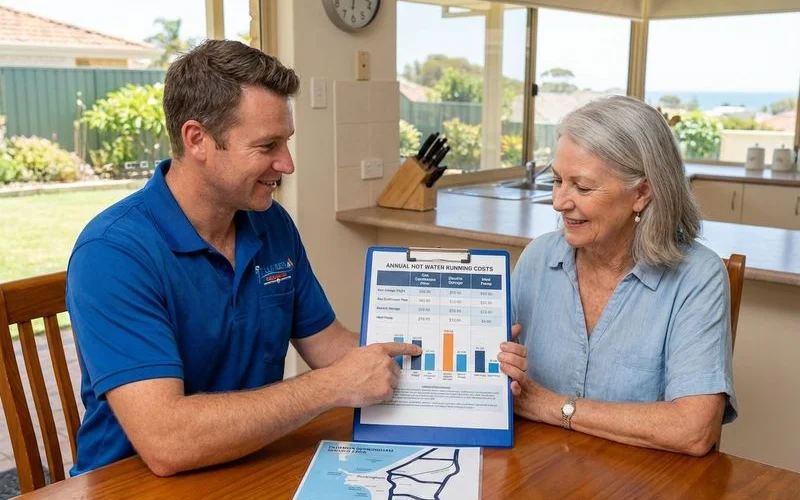
- Lowest running costs of any hot water system, typically 60 to 75 percent less than electric storage
- Eligible for Australian government rebates and Small-scale Technology Certificates (STCs)
- Excellent performance in Rockingham’s mild to warm climate
- Environmentally friendly with significantly lower carbon emissions
Disadvantages of heat pumps:
- Highest upfront cost, typically $3,000 to $5,500 installed before rebates
- Can be noisy during operation, so placement matters
- Performance drops in very cold conditions, though Rockingham rarely experiences extreme cold
- Larger physical size than continuous flow units
Rockingham’s coastal climate with mild winters and warm summers makes it an ideal location for heat pump technology. Ambient air temperatures rarely drop below 5 degrees Celsius, which means the heat pump operates near peak efficiency year-round. After rebates and STCs, the effective cost of a heat pump installation often drops to $1,500 to $3,000.
Which System Is Best for Rockingham?
The best system for your home depends on several factors including household size, budget, available energy connections, and your priorities around running costs versus upfront cost.
Best for budget-conscious buyers: Gas storage offers the lowest upfront cost if you already have a gas connection.
Best for unlimited hot water: Continuous flow gas is ideal for larger families who never want to run out of hot water.
Best for long-term savings: Heat pump systems offer the lowest running costs and significant rebates, making them the best investment over 10 to 15 years.
Best avoided for new installations: Electric storage systems should generally be replaced with a more efficient alternative when they reach end of life.
Making Your Decision
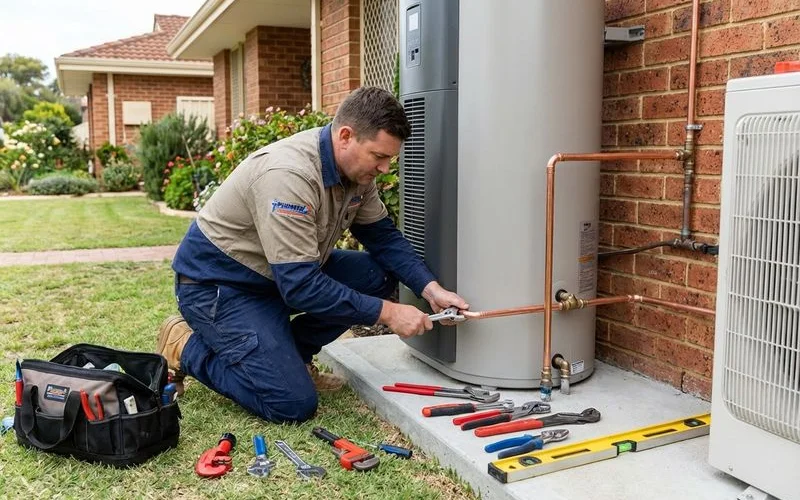
Before committing to a new hot water system, consider getting a professional assessment of your home. A licensed plumber can evaluate your gas supply pressure, electrical capacity, available space, and household usage patterns to recommend the most suitable option.
If you are replacing an existing system, you may also be able to take advantage of manufacturer trade-in offers or additional local council rebates for energy-efficient upgrades.
For expert advice on choosing and installing the right hot water system for your Rockingham home, contact Plumber Rockingham today. We supply, install, and service all major brands of gas, electric, and heat pump hot water systems across Rockingham, Baldivis, Secret Harbour, and surrounding suburbs. Our licensed plumbers will help you find the system that matches your household needs and budget.