A blocked drain is a frustrating problem, and the temptation to fix it yourself before calling a plumber is completely understandable. In many cases, a minor blockage can be cleared with basic tools and a bit of effort. However, there are situations where attempting a DIY fix can make the problem worse, damage your pipes, or simply waste your time when professional equipment is needed. Knowing the difference between a blockage you can handle and one that requires a professional is the key to saving both time and money.
When You Can Try DIY Drain Clearing
Some drain blockages are straightforward enough to tackle without professional help. Here are the scenarios where a DIY approach is reasonable.
Slow-draining bathroom sink or shower. If the water is draining slowly but still flowing, the blockage is likely near the surface and caused by hair and soap buildup. This is one of the easiest blockages to clear yourself.
Kitchen sink with standing water. A kitchen sink that has stopped draining is often blocked by food scraps and grease buildup in the trap directly under the sink. This is accessible and usually manageable without special tools.
Single fixture affected. If only one drain in the house is slow or blocked while all others work normally, the problem is localised and relatively minor.
Effective DIY Methods
If your blockage fits the scenarios above, try these methods in order from simplest to most involved.
Boiling water. The simplest approach is pouring a full kettle of boiling water directly into the drain. This can dissolve soap buildup and soften grease enough to clear a minor obstruction. Pour the water in two or three stages, allowing it to work for a few seconds between pours. This works best on kitchen sinks with mild grease buildup and is completely safe for all pipe types.
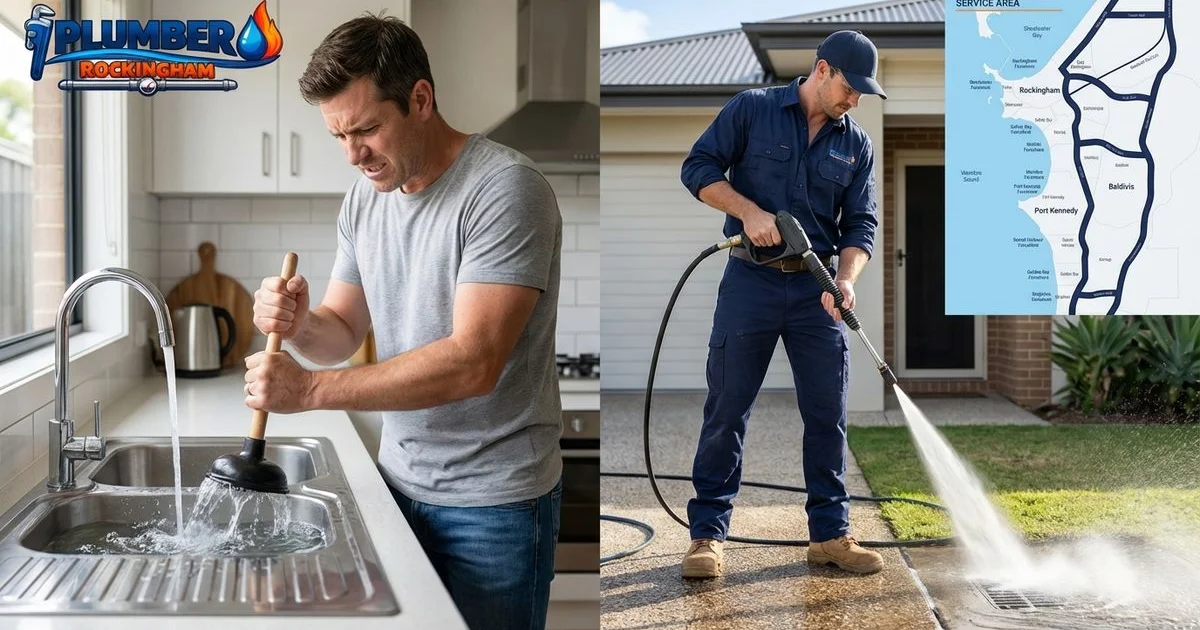
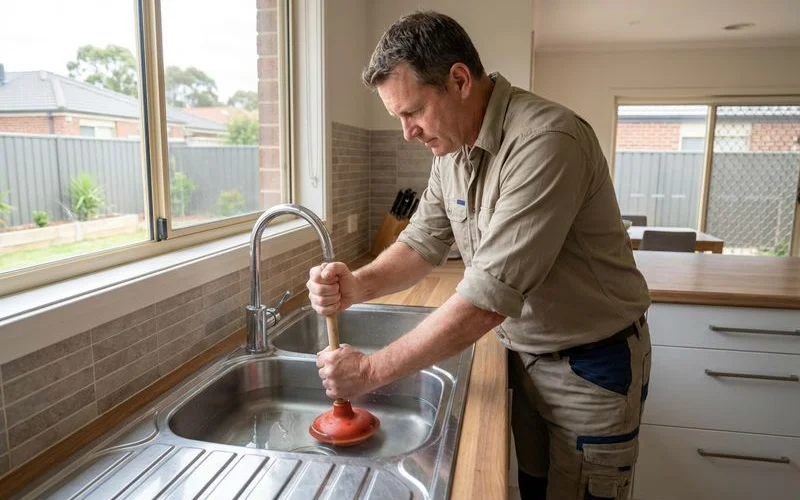
Plunger. A standard cup plunger can be very effective on sink and shower blockages. Fill the basin with enough water to cover the plunger cup, place it over the drain opening, and pump vigorously 15 to 20 times. The pressure change can dislodge blockages in the trap and nearby pipe section. Make sure you cover any overflow opening with a wet cloth to maintain suction.
Baking soda and vinegar. Pour half a cup of baking soda into the drain followed by half a cup of white vinegar. Cover the drain and let the mixture fizz for 30 minutes, then flush with boiling water. This natural approach can help break down organic buildup and is gentler on your pipes than chemical cleaners.
Manual removal. For shower and bath drains, the blockage is often sitting just below the grate. Remove the grate, use a pair of needle-nose pliers or a bent wire coat hanger to pull out the accumulated hair and debris. It is not pleasant work, but it is fast and effective.
Drain snake or auger. A basic hand-operated drain snake from the hardware store costs $15 to $40 and can reach blockages up to three metres into the pipe. Feed the snake into the drain while turning the handle, and it will either push through or hook onto the blockage. This is effective for blockages that are beyond the trap but still relatively close to the drain opening.
Why You Should Avoid Chemical Drain Cleaners
Chemical drain cleaners are readily available at supermarkets and hardware stores, and they promise to dissolve blockages quickly. While they can work on minor blockages, there are significant downsides that make them a poor choice in most situations.
Pipe damage. The caustic chemicals in most drain cleaners generate heat as they react with the blockage. This heat can soften and warp PVC pipes, and repeated use can weaken pipe joints and seals. Older clay and cast-iron pipes are also vulnerable to damage from harsh chemicals.
Ineffective on serious blockages. Chemical cleaners work by dissolving organic matter, but they are largely ineffective against tree roots, collapsed pipes, solid foreign objects, and compacted buildup. Pouring chemicals on a blockage they cannot dissolve simply leaves a pipe full of caustic liquid that a plumber then has to deal with safely.
Environmental and health concerns. Drain cleaning chemicals are toxic and can cause chemical burns on skin contact. The fumes are harmful to breathe, particularly in enclosed spaces like under a sink. Once they pass through your drain, they enter the wastewater treatment system and can harm the environment.
Masking deeper problems. Even when chemical cleaners temporarily clear a drain, they often do not fully remove the underlying cause. The blockage returns within weeks, and the homeowner ends up using the product repeatedly, causing cumulative pipe damage without ever solving the real problem.
If you are going to use any product at all, enzyme-based drain maintainers are a safer alternative. These use natural bacteria to break down organic buildup over time and are safe for all pipe types. However, they work slowly and are better suited to maintenance than clearing an active blockage.
When to Call a Professional Plumber
There are clear situations where DIY methods are unlikely to work and a professional plumber is the right call from the start.
Multiple drains are affected. If two or more fixtures are draining slowly or backing up simultaneously, the blockage is in the main sewer line rather than an individual branch pipe. Main sewer blockages require professional equipment to locate and clear.
Sewage is backing up. If wastewater or sewage is coming up through floor drains, shower drains, or toilets, you have a serious blockage in the main sewer line. This is a plumbing emergency that requires immediate professional attention. Raw sewage poses health risks and can cause significant property damage if not resolved quickly.
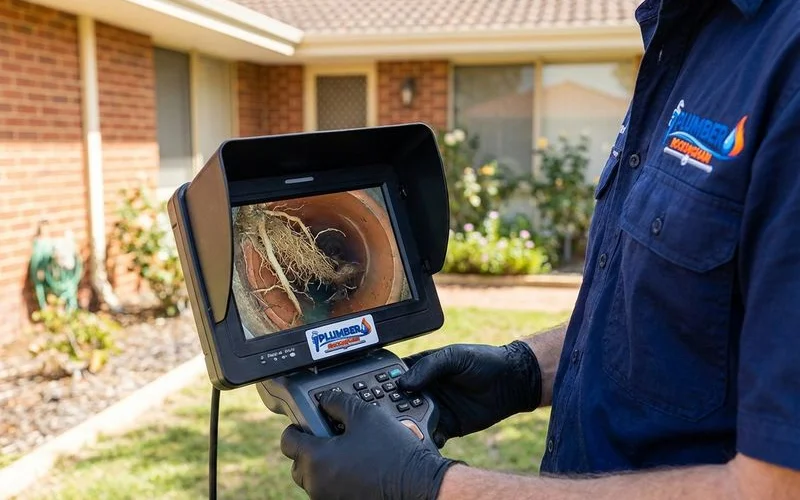
Recurring blockages. If the same drain keeps blocking despite being cleared, there is an underlying cause that DIY methods are not addressing. Common causes include tree root intrusion, a sagging or damaged pipe section, or a pipe alignment issue that catches debris. A plumber with a CCTV drain camera can diagnose the root cause and provide a lasting solution.
Foul odours from drains. Persistent sewer smells from drains can indicate a blockage deeper in the system, a dry P-trap, or a damaged pipe allowing sewer gases to escape. A plumber can determine the cause and make the appropriate repair.
The toilet is completely blocked. While a simple toilet blockage from excessive paper can often be cleared with a plunger, a toilet that backs up repeatedly or will not clear with plunging likely has an obstruction deeper in the drain line. Attempting to force the blockage through with excessive plunging or improvised tools can damage the toilet or push the obstruction further into the pipe.
What Professional Plumbers Can Do That You Cannot
Licensed plumbers have access to specialised equipment that makes drain clearing faster, more effective, and less likely to cause collateral damage.
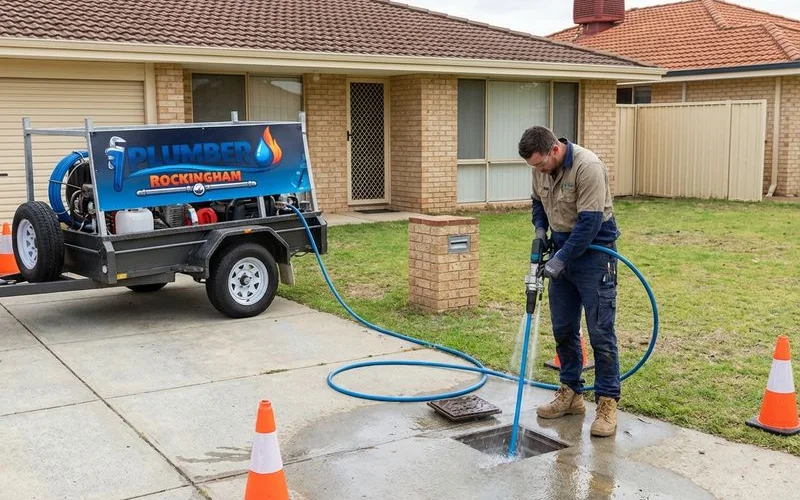
High-pressure water jetting uses a powerful stream of water at up to 5,000 PSI to cut through tree roots, dissolve grease, and blast away compacted debris. It cleans the full diameter of the pipe, not just a hole through the middle of the blockage, which means the drain stays clear for longer.
CCTV drain cameras allow the plumber to see exactly what is causing the blockage and assess the condition of the pipe. This eliminates guesswork and ensures the correct solution is applied. It also identifies problems like cracked pipes, root intrusion, and joint displacement that would otherwise go undetected.
Electric drain machines with professional-grade cutting heads can remove tree roots and heavy buildup that consumer-grade drain snakes cannot handle. These machines are powerful enough to clear the toughest blockages without damaging the pipe when operated by an experienced plumber.
The Cost Comparison
A basic plumber call-out for drain clearing in Rockingham typically ranges from $150 to $350 depending on the severity and location of the blockage. A CCTV inspection adds $150 to $300 but provides valuable diagnostic information that prevents recurring problems.
Compare this to the cumulative cost of DIY attempts: a plunger ($10 to $20), a drain snake ($15 to $40), multiple bottles of chemical cleaner ($10 to $20 each), and potentially several hours of your time. If the DIY approach does not work and you call a plumber anyway, you have spent that money and time for nothing.
The real cost saving comes from getting the problem properly diagnosed and fixed the first time, especially for recurring blockages where an underlying cause needs to be addressed.
The Bottom Line
For a simple, localised blockage in a single fixture, a DIY attempt with a plunger or drain snake is reasonable and may save you the cost of a plumber call-out. For anything more serious, including recurring blockages, multiple affected fixtures, sewage backup, or main sewer line issues, calling a professional plumber is the faster, safer, and more cost-effective option.
If you have a blocked drain in Rockingham that is beyond a simple DIY fix, contact Plumber Rockingham. We provide fast, professional drain clearing using CCTV cameras and high-pressure water jetting to get your drains flowing freely and keep them that way. We service Rockingham, Baldivis, Port Kennedy, Secret Harbour, Warnbro, and all surrounding suburbs.