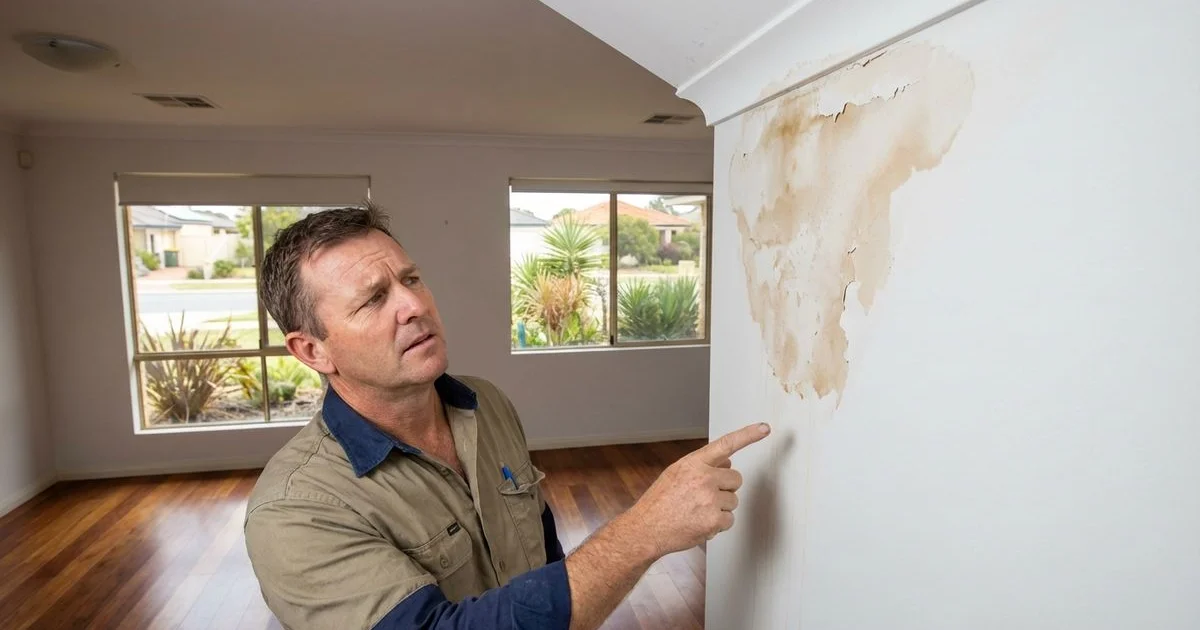
Flexible braided hoses, commonly known as flexi hoses or flexi connectors, are one of the most common causes of catastrophic water damage in Australian homes. These seemingly harmless connectors are found in almost every home, connecting taps, toilets, dishwashers, and washing machines to the water supply. When a flexi hose fails, it releases a continuous, high-pressure stream of water into your home that can cause tens of thousands of dollars in damage within hours.
Insurance industry data shows that burst flexi hoses are one of the single largest causes of home insurance claims in Australia, with the average claim for water damage from a burst hose exceeding $30,000. In Rockingham, where many homes were built during the suburban expansion of the 1990s and 2000s, thousands of flexi hoses are now reaching or have already exceeded their recommended lifespan.
This guide explains what flexi hoses are, why they fail, how to identify at-risk hoses in your home, and the simple preventative steps that can protect you from a devastating flood.
What Are Flexi Hoses and Where Are They Used
Flexi hoses are short, flexible connectors made of a rubber inner tube reinforced with an outer braid of stainless steel wire. They are used to connect plumbing fixtures to the water supply lines in your walls or floor. The flexibility of the hose allows for easy installation and absorbs minor movement and vibration without stressing rigid pipe connections.
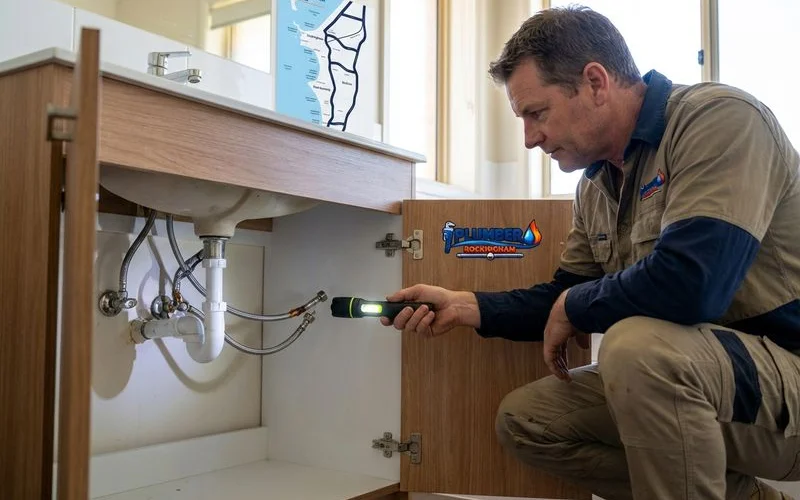
In a typical Rockingham home, you will find flexi hoses in the following locations. Under the kitchen sink connecting the hot and cold taps to the supply pipes. Under each bathroom basin connecting the taps to the supply pipes. Behind each toilet connecting the cistern to the supply pipe. Under the laundry tub connecting the taps to the supply pipes. Behind the dishwasher connecting it to the water supply. Behind the washing machine connecting it to the hot and cold supply. In some cases, connecting the hot water system to the supply pipework.
A typical home has between 10 and 20 flexi hoses installed. Each one is a potential failure point that could flood your home.
Why Flexi Hoses Fail
Flexi hoses fail for several reasons, and understanding these failure mechanisms helps explain why replacement at regular intervals is so important.
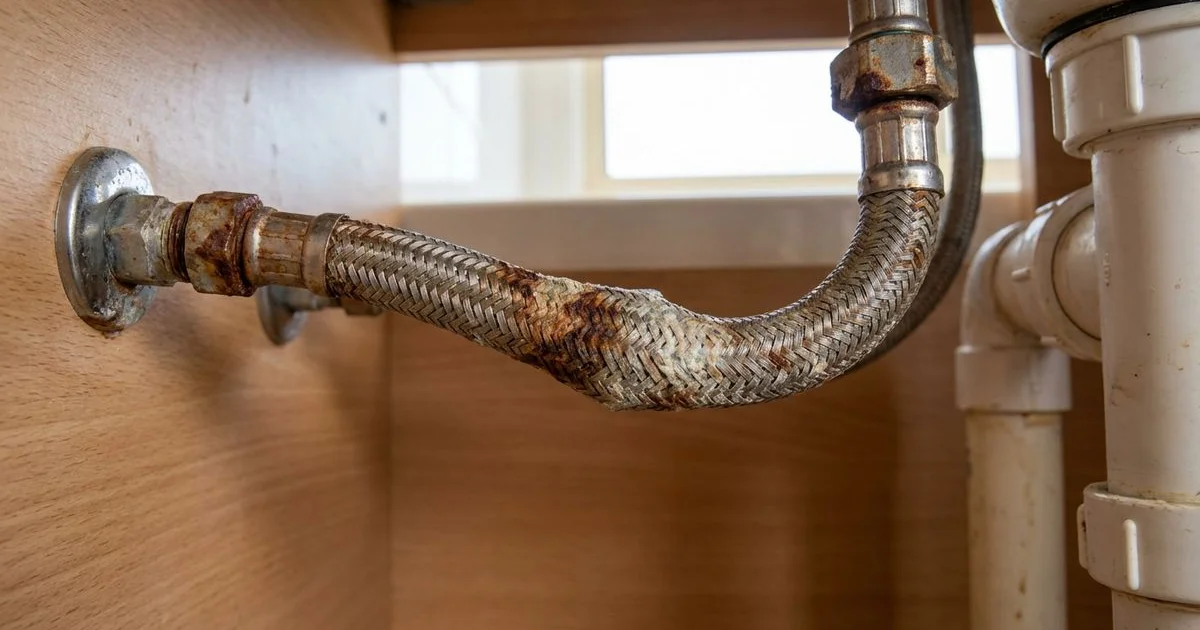
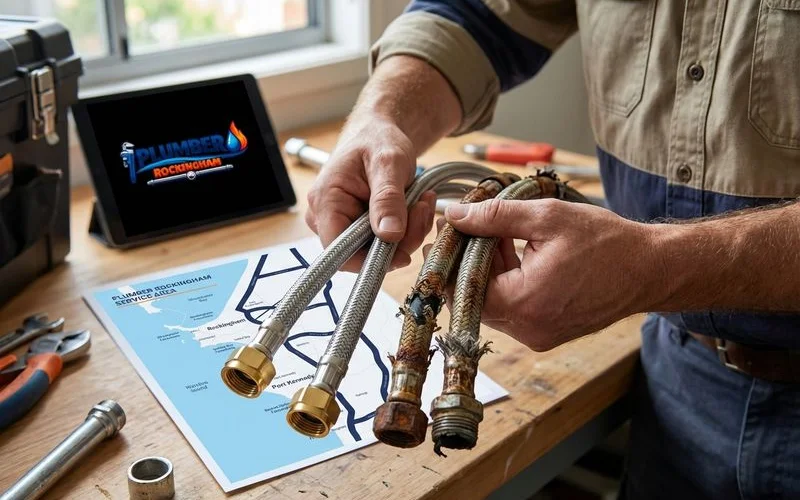
Corrosion of the stainless steel braid. Despite being called stainless steel, the outer braid is not immune to corrosion. Exposure to moisture, cleaning chemicals, and even the natural humidity in enclosed spaces under sinks and behind toilets can cause the stainless steel strands to corrode and weaken over time. Once enough strands have corroded through, the braid can no longer contain the pressure of the water inside the rubber tube, and the hose bursts.
Degradation of the rubber inner tube. The rubber tube inside the braid deteriorates with age due to constant exposure to water pressure, temperature fluctuations from hot and cold water, and the chemical composition of the water supply. As the rubber ages, it becomes brittle and loses its elasticity, making it more susceptible to cracking and splitting.
Poor quality manufacturing. Not all flexi hoses are created equal. Lower-quality hoses use thinner stainless steel braid, inferior rubber compounds, and less robust crimped fittings at each end. These hoses may fail well before their stated lifespan. The Australian Competition and Consumer Commission has recalled multiple brands of flexi hoses over the years due to premature failure risks.
Installation issues. Flexi hoses that are kinked, twisted, overly stretched, or installed under tension during the initial installation are more likely to fail prematurely. A hose that is bent at a sharp angle near the fitting creates a stress point where the braid and rubber are more likely to deteriorate.
Water pressure. High water pressure accelerates the wear on flexi hoses. Homes in some parts of Rockingham experience higher than average water pressure, particularly properties at lower elevations or close to water mains booster stations. If your water pressure exceeds 500 kPa, the stress on your flexi hoses is significantly increased.
How to Identify At-Risk Flexi Hoses
Regular visual inspection of your flexi hoses can identify deterioration before a catastrophic failure occurs. Check each flexi hose in your home for the following warning signs.
Rust or discolouration on the braid. Any brown, orange, or dark discolouration on the stainless steel braid indicates corrosion has begun. If you can see individual strands that have rusted through or broken, the hose is at high risk of failure and should be replaced immediately.
Bulging or swelling. If the hose appears to bulge or swell at any point along its length, the rubber inner tube is deforming under pressure because the braid is no longer providing adequate reinforcement. This is a critical warning sign of imminent failure.
Moisture or dripping at the fittings. Any moisture, weeping, or dripping at the crimped fittings where the hose connects to the tap or supply pipe indicates a seal failure. While a dripping fitting may seem minor compared to a full burst, it indicates that the hose is deteriorating and needs replacement.
Kinks or sharp bends. Check that the hose follows a smooth curve without any kinks, sharp bends, or twists. A kinked hose is under stress at the bend point and is more likely to fail at that location.
Age. If you do not know the age of your flexi hoses, they may have been installed when the home was built. For Rockingham homes built in the 1990s or 2000s, original flexi hoses are well beyond their recommended lifespan and should be replaced regardless of their visual appearance.
When to Replace Flexi Hoses
The general industry recommendation is to replace all flexi hoses every 10 years at a maximum. Many plumbing professionals, including insurance companies, recommend replacement every 5 years for standard quality hoses. Some manufacturers print an expiry date on the hose itself, which should be followed.
Given the relatively low cost of the hoses and the catastrophic cost of a failure, replacing flexi hoses on a regular preventative schedule is one of the best investments a homeowner can make. The cost to replace all flexi hoses in a typical Rockingham home is a fraction of the excess on a single water damage insurance claim, let alone the uninsured costs such as temporary accommodation, lost personal items, and the stress and disruption of living through a flood repair.
We recommend the following replacement schedule. Replace all flexi hoses when you purchase a property, unless the previous owner can provide evidence of recent replacement. Replace all flexi hoses every 5 to 8 years as a preventative measure. Replace any individual hose immediately if visual inspection reveals signs of deterioration. Replace flexi hoses as part of any bathroom or kitchen renovation.
How to Minimise Damage If a Flexi Hose Bursts
Despite preventative measures, flexi hose failures can still occur. The following steps can minimise the damage if a hose bursts in your home.
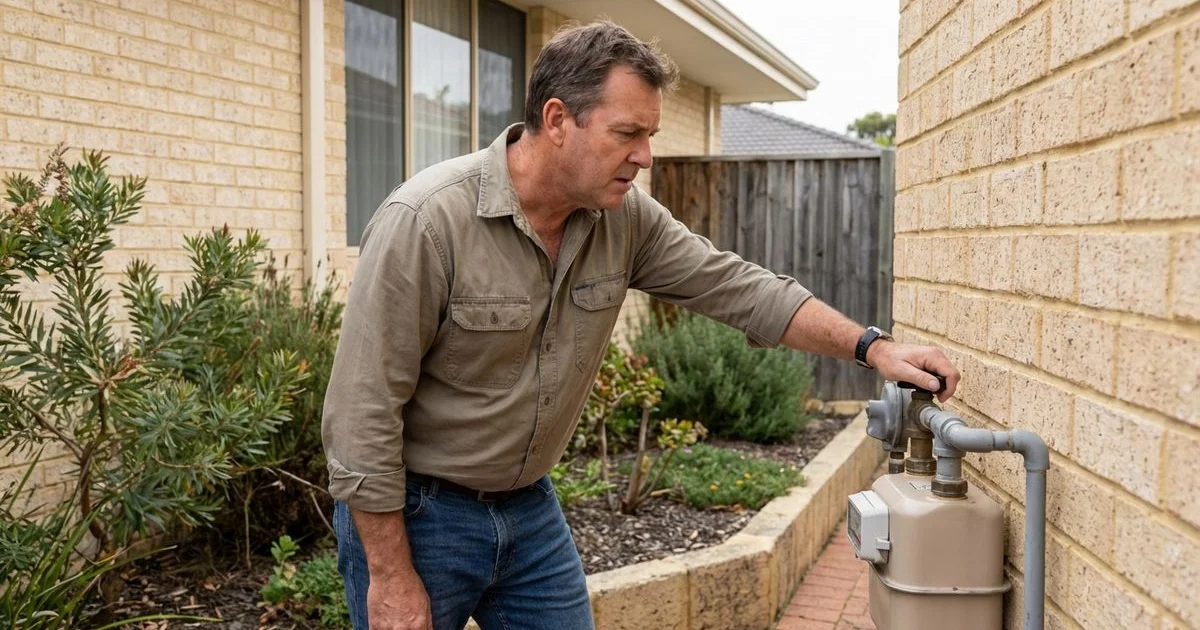
Know where your main shutoff valve is. Every member of your household should know the location of the main water shutoff valve and how to turn it off quickly. In an emergency, turning off the main valve is the fastest way to stop the flood. Practice turning it off so you can do it without hesitation in a stressful situation.
Turn off water when you leave home for extended periods. If you are going on holiday, staying away overnight, or leaving the house for an extended period, turn off the water at the main valve. A flexi hose that bursts while you are away can flood your home for hours or days before anyone notices. This single precaution prevents the vast majority of catastrophic flood damage claims.
Install a water leak detection system. Electronic water leak detectors placed under sinks, behind toilets, and near washing machines can alert you to a leak at the earliest stage. Some systems can automatically shut off the water supply when a leak is detected. These systems range from simple battery-powered alarms to smart home integrated systems with automatic shutoff valves.
Check your home insurance. Confirm that your home insurance policy covers water damage from burst flexi hoses, including damage to floors, walls, cabinetry, and personal belongings. Check the excess amount and any exclusions that may apply. Some insurers offer premium discounts if you can demonstrate that flexi hoses have been replaced within the recommended timeframe.
Upgrade to Higher Quality Hoses
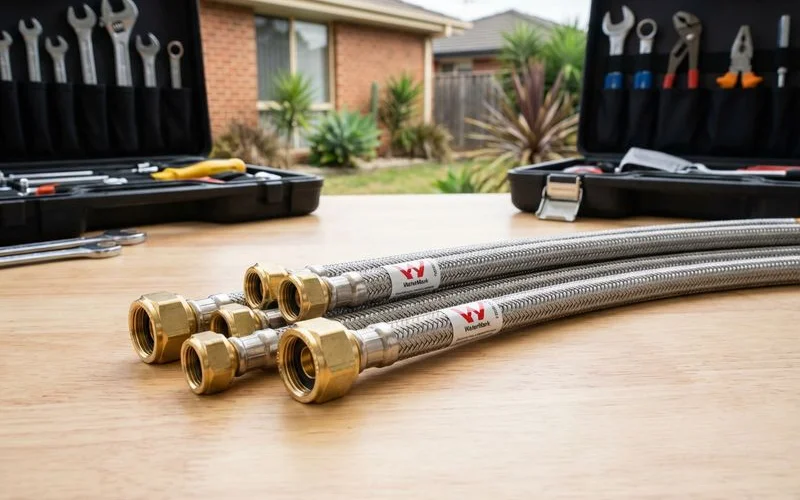
When replacing flexi hoses, specify premium quality hoses that comply with AS/NZS 3499 and carry the WaterMark certification. Higher quality hoses use a thicker stainless steel braid with more strands, a more durable inner tube material, and better crimped fittings. Some premium hoses include an additional burst-resistant inner liner that contains the water if the outer braid fails, preventing a full flood.
Your plumber can advise on the best hose options for your specific installation requirements and water pressure conditions.
Prevention Is Always Cheaper Than Repair
A complete flexi hose replacement for your entire home is one of the most cost-effective preventative plumbing measures available. The cost is minimal compared to the potential tens of thousands of dollars in water damage, the disruption to your daily life, and the stress of dealing with insurance claims and building repairs.
Plumber Rockingham can inspect and replace all flexi hoses in your Rockingham home, typically in a single visit. We use premium WaterMark certified hoses, check your water pressure, and provide a written record of the replacement for your insurance records. Contact us to arrange a flexi hose inspection and replacement, and protect your home from this hidden flood risk. You can also learn more about our comprehensive leak detection services for identifying other hidden risks in your plumbing system.