A bathroom renovation is one of the most complex home improvement projects you can undertake, and plumbing is at the heart of it. Every fixture in a bathroom, from the toilet and basin to the shower, bath, and floor waste, requires water supply connections, drainage connections, or both. Moving, replacing, or upgrading any of these fixtures involves plumbing work that must be planned carefully, executed by a licensed professional, and inspected by the relevant authority before being concealed behind walls and floors.
Poor plumbing planning is one of the most common causes of renovation delays, budget blowouts, and post-renovation problems. The more information you can provide to your plumber before the renovation begins, the smoother the project will run. This checklist covers everything your plumber needs to know and everything you need to consider from a plumbing perspective before, during, and after your Rockingham bathroom renovation.
Before You Start: Planning Phase
The planning phase is where the most important plumbing decisions are made. Changes made at this stage cost nothing, while changes made once work has begun can be expensive and time-consuming.
Define Your Layout
The bathroom layout determines where every plumbing connection needs to be. Your plumber needs to know the exact position of every fixture in the renovated bathroom, including the toilet, vanity basin, shower, bath if applicable, and any additional fixtures such as a bidet or urinal.
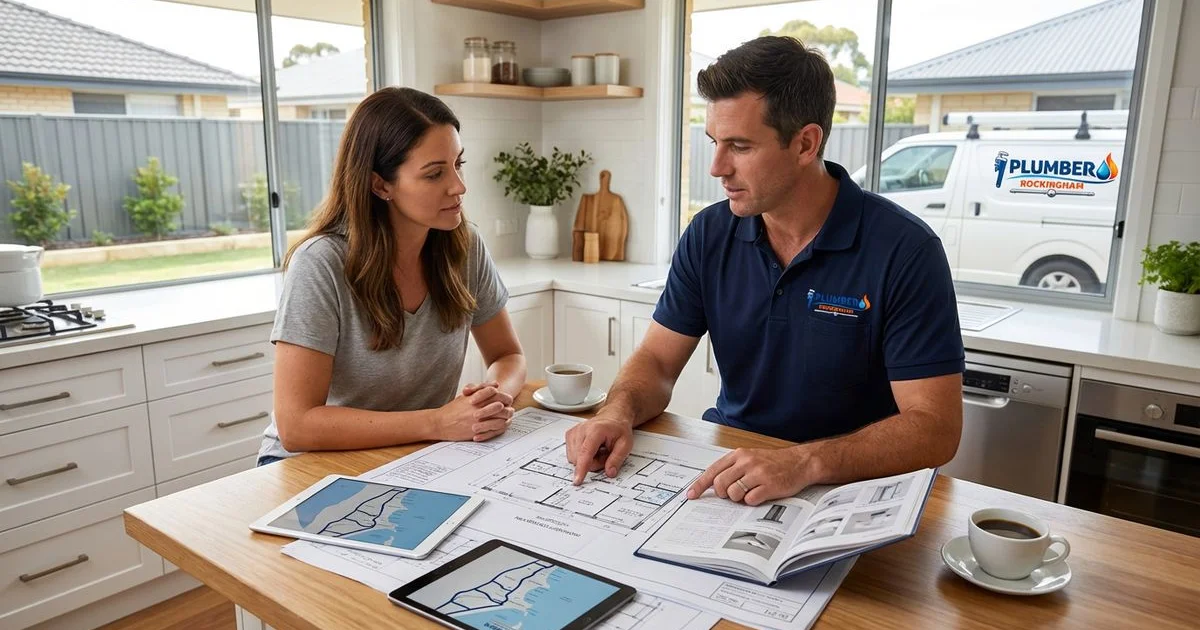
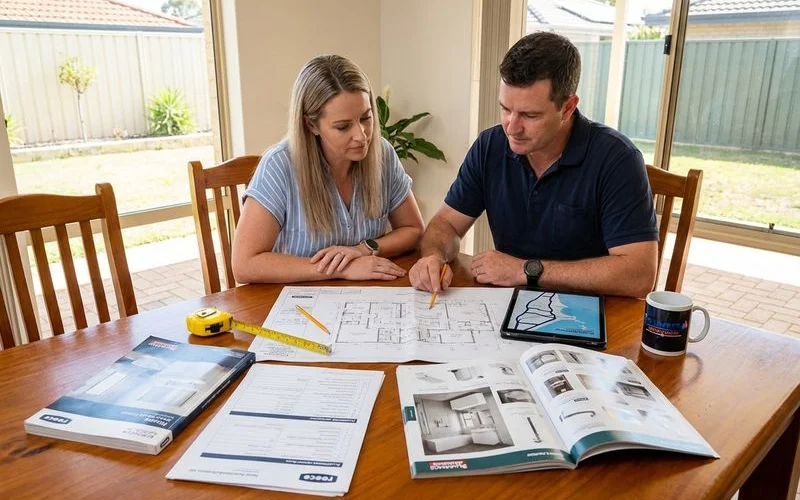
Provide your plumber with a scaled floor plan showing the proposed location of each fixture. If you are working with a bathroom designer or builder, ensure the plan is shared with the plumber early in the process. If you are managing the renovation yourself, even a rough sketch with measurements is better than no plan at all.
The critical measurement for each fixture is its position relative to the existing waste and supply pipe locations. Moving a toilet, for example, requires relocating the 100mm sewer connection in the floor slab, which is significantly more complex and expensive than keeping the toilet in its original position. Similarly, moving a shower from one wall to another requires new supply pipes and a new waste connection.
Key question to resolve: Are you keeping fixtures in their current positions, or are you relocating any of them? Relocating fixtures adds substantially to the plumbing cost and may require slab cutting or sub-floor pipe modifications.
Choose Your Fixtures Before the Rough-In
One of the most important rules for a smooth bathroom renovation is to select and purchase your fixtures before the plumbing rough-in begins. Your plumber needs to know the exact specifications of each fixture to position the supply pipes, waste connections, and mounting points correctly.
Different toilet brands and models have different setback measurements, which is the distance from the wall to the centre of the waste pipe. If the rough-in is done for one toilet model and you later change to a different model with a different setback, the waste pipe will be in the wrong position.
Similarly, vanity basins come in various widths, depths, and mounting configurations including wall-mounted, freestanding, and under-counter. Each requires supply and waste pipes in different positions. Shower mixers, rail showers, and overhead rain showers all have different pipe positions and heights.
Provide your plumber with the manufacturer’s installation guides for every fixture. These guides specify the exact pipe positions, heights, and clearances required for correct installation.
The Plumbing Rough-In Checklist
The rough-in is the stage where all concealed plumbing work is completed before walls are closed up and floors are tiled. This is the most critical phase of bathroom plumbing because any errors at this stage are expensive and disruptive to fix later.
Water Supply
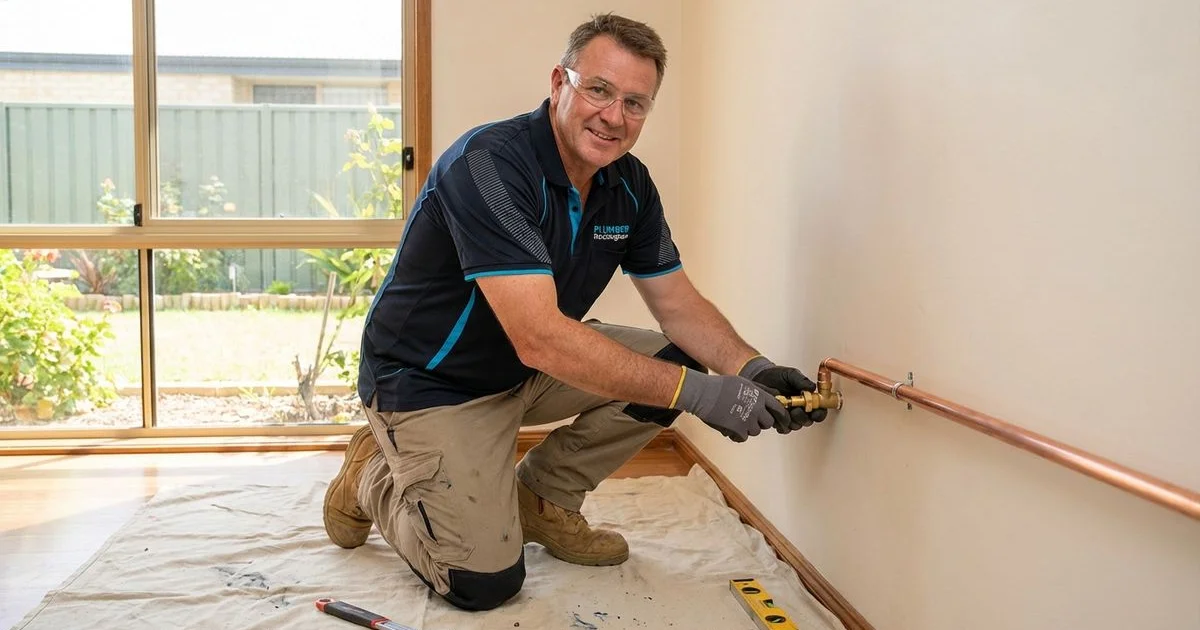
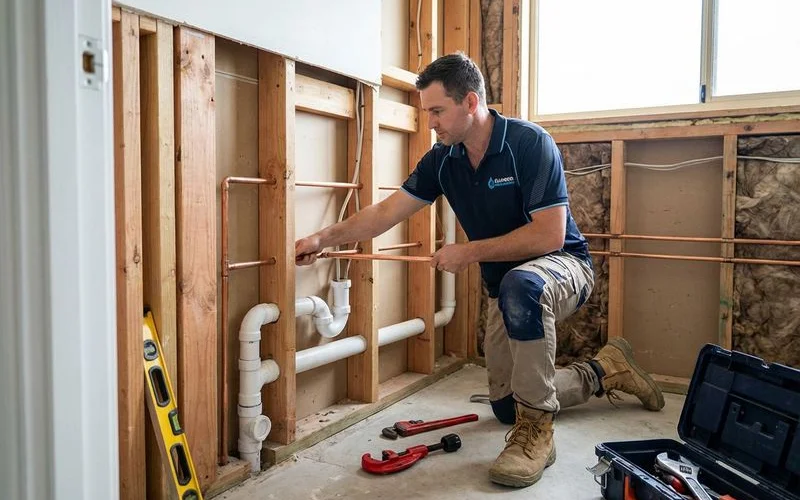
Your plumber will install or modify the hot and cold water supply pipes to serve each fixture in its new position. The checklist for the supply rough-in includes the following.
Hot and cold supply to the basin. Confirm the position, height, and spacing based on the vanity specifications. Wall-mounted vanities typically require supply connections at a different height than freestanding vanities.
Hot and cold supply to the shower mixer. Confirm the mixer model and the required pipe centres. The height of the shower mixer on the wall should be determined at this stage and marked on the framing. Standard mixer height is approximately 1,000mm to 1,100mm from the finished floor level, but this varies depending on the mixer model and your preference.
Hot and cold supply to the bath. If a bath is included, confirm whether it has a wall-mounted mixer, a freestanding floor-mounted mixer, or a deck-mounted mixer on the bath rim. Each requires supply pipes in a different location.
Cold supply to the toilet cistern. Confirm the position based on the toilet model and whether it is a back-to-wall, wall-hung, or close-coupled design. Wall-hung toilets require a concealed cistern frame to be installed within the wall cavity during the rough-in.
Isolation valves. Ensure isolation valves are installed on the supply to each fixture. These allow individual fixtures to be shut off for maintenance or repair without turning off the water to the entire house.
Water pressure check. If the existing water pressure is too high, a pressure limiting valve should be installed to protect new fixtures and mixers. Many modern tapware products have maximum pressure ratings that must not be exceeded.
Drainage
The drainage rough-in is equally critical and less forgiving of errors because waste pipes must fall at a specific gradient to drain correctly.
Toilet waste. Confirm the setback measurement and ensure the 100mm waste connection is positioned correctly for the selected toilet model. If the toilet is being relocated, confirm the new waste route and ensure adequate fall to the main sewer line.
Shower waste. Confirm the position and type of shower waste. Modern walk-in showers typically use a tile insert grate, a strip drain, or a traditional round grate. Each has different installation requirements. The shower waste must connect to the drainage system with adequate fall and must be accessible for maintenance.
Basin waste. Confirm the position based on the vanity type. Wall-mounted vanities with exposed plumbing require a neater waste installation than vanities with a cabinet that conceals the waste pipe.
Bath waste and overflow. If a bath is included, confirm the waste and overflow positions. Freestanding baths often require a floor waste connection that must be accurately positioned before the floor is tiled.
Floor waste. Australian building codes require a floor waste in every bathroom for overflow protection. Confirm the position of the floor waste and ensure the floor has adequate fall toward it from all directions. The floor waste must be connected to the drainage system with appropriate fall.
Waterproofing Coordination
Waterproofing is not a plumbing task, but it is directly affected by plumbing work and must be coordinated carefully. All plumbing penetrations through the floor and walls must be completed and tested before waterproofing is applied. The waterproofing membrane must dress up around pipe penetrations to create a continuous waterproof barrier.
Your plumber and waterproofer need to coordinate their schedules so that plumbing rough-in is complete and inspected before waterproofing begins. Any plumbing work done after waterproofing has been applied will puncture the membrane and compromise its effectiveness.
During the Renovation: Key Considerations
Once the rough-in is complete and inspected, several plumbing-related considerations arise during the construction and finishing phases.
Hot Water Capacity
Adding a larger shower, a double vanity, or a freestanding bath increases the hot water demand from your bathroom. If your existing hot water system is already marginal in capacity, the increased demand from the renovated bathroom may result in running out of hot water during peak usage.
Discuss your hot water requirements with your plumber during the planning phase. They can assess whether your current system can handle the increased demand or whether an upgrade is needed. Read our comparison of hot water system types for guidance on choosing the right system.
Gas Work
If your bathroom renovation involves relocating or replacing a gas hot water system, or if the bathroom previously had a gas space heater that is being removed, a licensed gas fitter must handle the gas work. Gas pipe modifications, disconnections, and new connections must be performed by a licensed gas fitter and tested for leaks before being put into service. Ensure your plumber also holds a gas fitting licence if gas work is involved.
Ventilation
Adequate ventilation is essential in a renovated bathroom to prevent moisture buildup, mould growth, and premature deterioration of fixtures and finishes. If your renovated bathroom does not have an openable window, a mechanical exhaust fan is required by the Building Code of Australia. Even bathrooms with windows benefit from an exhaust fan.
While ventilation fan installation is typically an electrical task, the plumber may need to coordinate with the electrician regarding the position of the fan relative to the shower and the routing of the exhaust duct to the exterior of the building.
Accessibility
If the bathroom renovation is intended to accommodate current or future accessibility needs, discuss these requirements with your plumber during the planning phase. Accessible bathrooms may require larger shower areas with barrier-free entries, grab rail blocking installed within the walls during the rough-in, specific fixture heights and clearances, and lever-style tap controls rather than traditional knob handles.
Planning for accessibility during the renovation is far more cost-effective than retrofitting later.
After the Renovation: Final Checks
Once tiling, painting, and fitting-off are complete, a final plumbing check ensures everything is functioning correctly before you start using the bathroom.
Test Every Fixture
Turn on every tap, flush every toilet, and run every shower to verify that supply connections are working, there are no leaks at any connection, hot and cold are not reversed on any mixer, water pressure and flow rate are adequate, all drains are flowing freely and at an acceptable rate, there are no leaks from waste connections under fixtures, and the floor waste is draining correctly.
Check for Leaks After 24 Hours
Some leaks only become apparent after fixtures have been used under normal conditions for a period of time. Check under vanities, behind the toilet, and around the shower recess for any signs of moisture 24 hours after first use and again after one week.
Obtain Compliance Certificates
Your plumber should provide a compliance certificate for the plumbing work upon completion. In WA, plumbing work over a certain value or complexity requires a plumbing permit and inspection by the local authority. Your plumber should have arranged the necessary permits and inspections during the renovation.
Keep the compliance certificate with your home records. It demonstrates that the work was performed by a licensed professional and meets the relevant standards, which is important for insurance purposes and if you sell the property in the future.

Plan Your Renovation With the Right Plumber
A successful bathroom renovation starts with good plumbing planning. The more you communicate with your plumber during the design phase, the fewer surprises there will be during construction, and the better the final result.
Plumber Rockingham provides complete bathroom renovation plumbing services across Rockingham, Baldivis, Port Kennedy, Secret Harbour, Warnbro, and all surrounding suburbs. From initial planning consultation and rough-in through to final fitting-off and testing, our licensed plumbers ensure your renovation plumbing is done right the first time. We also offer plumbing inspections to assess your existing plumbing before renovation work begins. Contact us to discuss your bathroom renovation plumbing requirements and get a detailed quote.